
Beyond Access: How SAFE’s Deaf SHARE Program Builds Trust with Survivors, One Conversation at a Time
Written by SAFE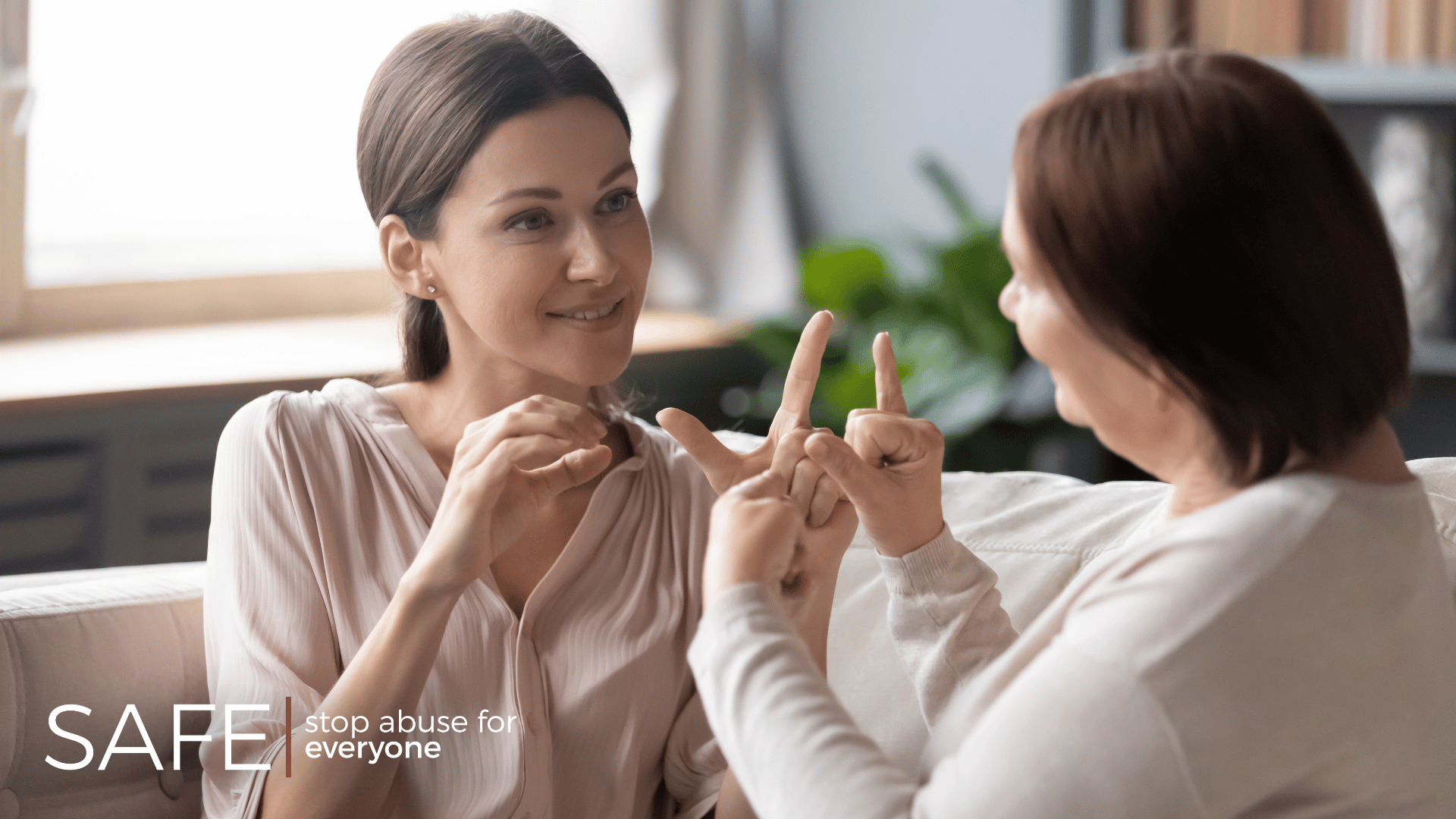
The workshop had ended and most people had gone, but one attendee stayed behind. They went to Joe Gallagher, Deaf SHARE’s Outreach Manager, and quietly asked about their own relationship.
“The information we shared helped them recognize that some of what they were experiencing wasn’t healthy and that support was available,” Joe said. “I was then able to connect them directly with our Deaf Advocate for additional support and safety planning… it showed me why community education matters.”
That conversation happened because the attendee could ask their questions directly, in their own language, to someone who understood the barriers they were up against. For many Deaf survivors, that kind of moment is too often out of reach.
When Barriers Compound
Recognizing abuse, understanding what is happening, and finding a way out are hard for anyone. For Deaf, DeafBlind, Late-Deafened, and Hard of Hearing survivors, each of those steps comes with more obstacles, and the obstacles stack on top of one another.
Most systems survivors rely on, from hotlines and shelters to law enforcement, courts, and healthcare, were designed around hearing people. For a Deaf survivor, that means fewer options at every turn. When an agency doesn’t offer ASL, a survivor may have to write down what happened to them. That writing becomes a paper trail the person harming them could find, and reaching out for help can end up making a survivor less safe.
When an ASL interpreter isn’t available right away, a survivor may have to wait hours or days before they can explain what’s happening. In a crisis, that delay can mean the difference between harm and safety. In the most extreme cases, it can mean the difference between life and death.
For many Deaf survivors, phones, video relay services, and texting are how they reach the outside world. A person causing harm who controls those devices, by monitoring messages, taking away a phone, or cutting off internet access, can isolate a survivor almost completely. That makes it even harder to reach out safely.
Beyond these practical obstacles, survivors may have lived through years of not being understood, believed, or included. That history can make it harder to name abuse and harder to trust that anyone will help.
Deaf SHARE (Survivor Healing through Advocacy, Resources, and Empowerment) was created with these realities in mind.
“We are a Deaf-led program serving Deaf, DeafBlind, Late-Deafened, and Hard of Hearing survivors of domestic and sexual violence, child abuse, rape, and human trafficking,” Joe said. “Through our lived experience and professional expertise, we understand that individual needs and accessibility look different for every person.”
More Than an Interpreter
ASL services matter, and Deaf SHARE’s approach goes further than communication access. Its advocates understand how being Deaf shapes a survivor’s experience of abuse and of the systems meant to help. They know where the gaps are, what risks a survivor may face in reaching out, and how to plan for safety with those risks in view.
“For us, accessibility isn’t just about providing an interpreter, it’s about making sure every survivor has the opportunity to understand their options, make informed decisions, communicate in the way that works best for them, and receive services and support that respect who they are,” Joe said.
When an advocate shares a survivor’s language and lived experience, the survivor doesn’t have to explain why a written note feels dangerous or why waiting for an interpreter isn’t an option. The advocate already knows, so the relationship begins on common ground. Survivors can speak freely and trust that they will be understood. Healing is built on that trust.
In 2026, SAFE’s Deaf Advocate has provided 192 case management services in ASL to 10 clients, including safety planning, housing assistance, referrals, financial and legal assistance, employment support, and ongoing advocacy. Services are available on SAFE’s campus or virtually, depending on what each survivor needs and prefers.
That trust is growing. Deaf SHARE’s client numbers have nearly doubled this year, a sign of the program’s rising visibility and the confidence the community is placing in it.
Changing Systems, Not Just Serving Within Them
Deaf SHARE works as a specialized, Deaf-led program inside SAFE’s wider network of services for survivors of domestic violence, sexual assault, child abuse, and human trafficking.
“Instead of expecting Deaf, DeafBlind, Late-Deafened, and Hard of Hearing survivors to navigate systems that were primarily designed around hearing people, Deaf SHARE brings Deaf cultural knowledge, communication access, advocacy, and accessibility directly into that system,” Joe explained.
That work goes beyond individual services, because the barriers survivors face don’t stop at SAFE’s doors. This year, Joe’s team has led nine community outreach and education sessions for 104 participants. Topics have included SAFE and Deaf SHARE services, teen dating violence, domestic violence in the workplace, and systems change within organizations.
“We educate staff, train community partners, identify accessibility barriers, and advocate for systems change so that Deaf and Hard of Hearing survivors have better access not only at SAFE, but throughout the broader community,” Joe said.
At Their Pace, On Their Terms
Joe knows that some survivors are still hesitant to reach out, especially if earlier attempts to get help put them at risk or left them feeling unheard. He doesn’t ask them to have everything figured out first.
“It’s okay to be hesitant. Asking for help can be a huge step, especially if you’ve had experiences where people didn’t believe you, understand you, communicate effectively with you, or respect your choices,” he said. “Sometimes the first step is simply having a conversation, asking questions, learning what your options are, and knowing that someone is there to support you.”
Deaf SHARE follows the survivor’s lead. “Our role isn’t to tell survivors what they should do,” Joe said. “Our role is to listen, provide information and options, support their decisions, and help them determine what safety looks like for them.”
This brings us back to the attendee who stayed after the workshop. One question, asked in their own language to someone who understood what they were facing, became a first step toward safety. Deaf SHARE works to make that step possible for every Deaf survivor, because, as Joe put it, “communication should never be a barrier to getting help.”
To learn more about the Deaf SHARE Program click here.
To contact their team directly email deafservices@safeaustin.org
You can also follow this program on Facebook and Instagram.
If you or someone you know needs help, contact SAFE for free resources and specialized care through the confidential, 24-hour SAFEline. Call: 512–267–SAFE (7233), Text: 737–888–7233, or Chat: safeaustin.org/chat.

