
SAFE Prepares to Welcome Nearly 300 Survivors into The Lancaster and The Sasha
Written by Valeria Perez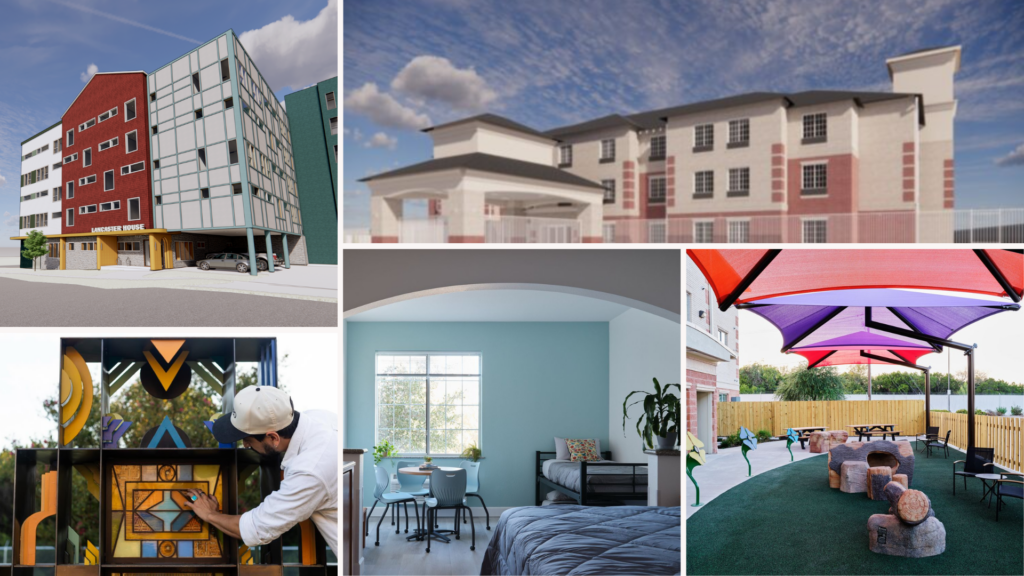
Housing plays a critical role in violence prevention, and SAFE currently provides housing across a wide spectrum to support survivors. This continuum allows us to house and shelter 1,000 people every night, while meeting survivors at different points in their journey toward healing and safety. It is essential for survivors to have a safe space to go to immediately while they figure out next steps and most will need a longer-term housing solution as they navigate the complex, lasting impact of trauma.
That longer-term need is where permanent supportive housing (PSH) comes in— and it’s about to grow significantly at SAFE. This Octubre, we’ll welcome the first residents of The Lancaster, with Sasha following this winter. Together, these two properties will allow SAFE to increase the number of survivors we house in permanent supportive housing by almost 300 people.
Defining Permanent Supportive Housing and its Significance for Survivors
Permanent supportive housing pairs long-term, affordable housing with on-site case management and supportive services, which include things like counseling, legal services, and on campus support to help navigate benefits. Unlike shelter or transitional housing, PSH comes with no time limit. A resident isn’t working toward an exit date; they’re building a life.
Fleeing violence often means leaving behind a home, an income, a support system, and sometimes years of stability, all at once. This is what also contributes to survivors experiencing chronic homelessness. After surviving abuse, most survivors have critical resources and relationships stripped away that would have otherwise kept them housed.
PSH exists to address these potential issues. It is designed with the reality that safety and healing do not happen on a deadline, and that some survivors need consistent, wraparound support to avoid cycling back into homelessness or any other unsafe situations.
The Scale of the Need in Austin/Travis County
The need for this kind of housing in our community is significant and well documented. According to data from Austin’s Ending Community Homelessness Coalition (ECHO), the region’s Point-in-Time count found just over 3,200 people in Austin and Travis County slept in tents, shelters, or cars on one night in Enero 2025 — about 800 more people, a 36% increase, compared to 2023.
ECHO’s modeling of what it would take to reach “functional zero” homelessness in our region found the city needs 4,175 additional permanent supportive housing units, which could cost nearly $217.5 million to build. That’s the scale of the gap that projects like The Lancaster and Sasha are working to help close, one building at a time.
The Cost of Not Investing in Housing
Permanent supportive housing isn’t just a compassionate response— it’s also a fiscally responsible one. When survivors and other vulnerable residents don’t have stable housing, they interact far more often with the most expensive systems our community funds: emergency rooms, jails, and courts.
ECHO’s research shows that over roughly five years, more than 360 people experiencing homelessness in Austin-Travis County died in a hospital, and the cost of their medical care in the year before their death totaled more than $11 million collectively. Separately, local homelessness officials estimate that stabilizing someone in their first 30 days of homelessness costs about $1,500 to $3,000 — but if that same person becomes chronically homeless, the cost of managing their needs can climb to roughly $35,000 over 15 to 20 years.
That math holds true for survivors as well. Every night a survivor spends without stable housing is a night they may need emergency shelter, crisis intervention, medical care for untreated conditions, or involvement with the courts — costs that are paid not just by the survivor, but by the entire community. Investing in permanent supportive housing up front is markedly less expensive, and far more humane, than absorbing those costs down the line.

