Home > Blog > “The Pitt” Reveals the Need for Trauma Informed, Survivor-Centered Care
“The Pitt” Reveals the Need for Trauma Informed, Survivor-Centered Care
Escrito por Emily Arismendy
“The Pitt” is a medical drama set in a fictional hospital in Pittsburgh, following emergency department staff through the intensity of a single 15-hour shift. The series highlights the realities of understaffed, high-pressure medical environments and the emotional weight carried by healthcare professionals.
In Season 2, Episode 7 viewers are given a glimpse into what a forensic exam can look like in a hospital setting. For many, scenes like these may be their first exposure to a process that is often misunderstood or surrounded by uncertainty.
After much public discourse, our staff at Eloise House gathered to reflect on the portrayal. But the conversation that followed wasn’t simply about what the show got right or wrong. It was about something deeper—what it feels like to be in that room, and how different that feeling can be depending on who is guiding the experience.
Through conversations with Paula, Director of Forensic Nursing, and Holly, Director of Sexual Assault Victim Advocacy, one thing became clear: while every setting aims to provide care, the approach at Eloise House is intentionally designed to prioritize advocacy, autonomy, and trauma-informed support at every step.
A Different Approach
At the heart of Eloise House’s model is a simple but powerful principle: the survivor guides the process.
Rather than following a rigid, clinical structure, nurses and advocates work together to meet each person where they are—emotionally, physically, and mentally. Every step of the exam is explained, and every decision belongs to the survivor.
As Paula explained, “There is a pace difference that exists in the emergency room. Here at Eloise House, we take the pace from our patients. We ensure that we have a conversation at the very beginning to discuss options and really illicit the priorities of our patients. No exam is the same, and we take those cues from our patients, and I think that really shows the level of trauma informed care we provide here at Eloise House.
This means there is no assumption about what comes next. No pressure to move forward. No expectation that every step must be completed.
Instead, there is space.
Space to ask questions. Space to pause. Space to say no. And just as importantly—space to change their mind.
One survivor who received care at Eloise House noted, “I didn’t think I was worthy of even getting services after I was assaulted. My advocate and nurse made sure that perspective changed. They didn’t judge my choice to not report — and then hugged me with tears when I changed my mind two weeks later and went back to sign the paperwork. They truly saved my life.”
Advocacy at Every Step
One of the most defining aspects of this approach is the presence of dedicated advocates throughout the entire process.
Paula felt that in “The Pitt’s” portrayal the advocate’s role was depicted as more of an afterthought than what she sees play out in reality. At Eloise House, advocacy is not an add-on—it is embedded into the care itself. Advocates are there from beginning to end, offering a consistent, grounding presence and ensuring the survivor feels heard, respected, and never alone.
As Holly explained, “Our advocates and nurses work incredibly closely together so every survivor is greeted by both, we’re with them the entire time. Because we work so closely together, that has informed all of the things we do and offer here at Eloise House.”
“Healing starts happening here and we’re trying to give control with whatever decisions they make about their care here in Eloise House. That connection with the advocate enables healing to continue. We can get them connected with other resources in the community. We follow up to see how they’re doing. We help them find counseling services, peer support groups, stuff like that,” she added.
This continuous support shifts the dynamic in subtle but powerful ways. The experience no longer feels like something happening to the survivor—but something being navigated with them.
Environment Matters
In many medical settings, care is shaped by urgency. There are timelines to follow, rooms to turn over, systems to keep moving. Even in the most compassionate environments, that pace can be felt.
Eloise House was built to feel different.
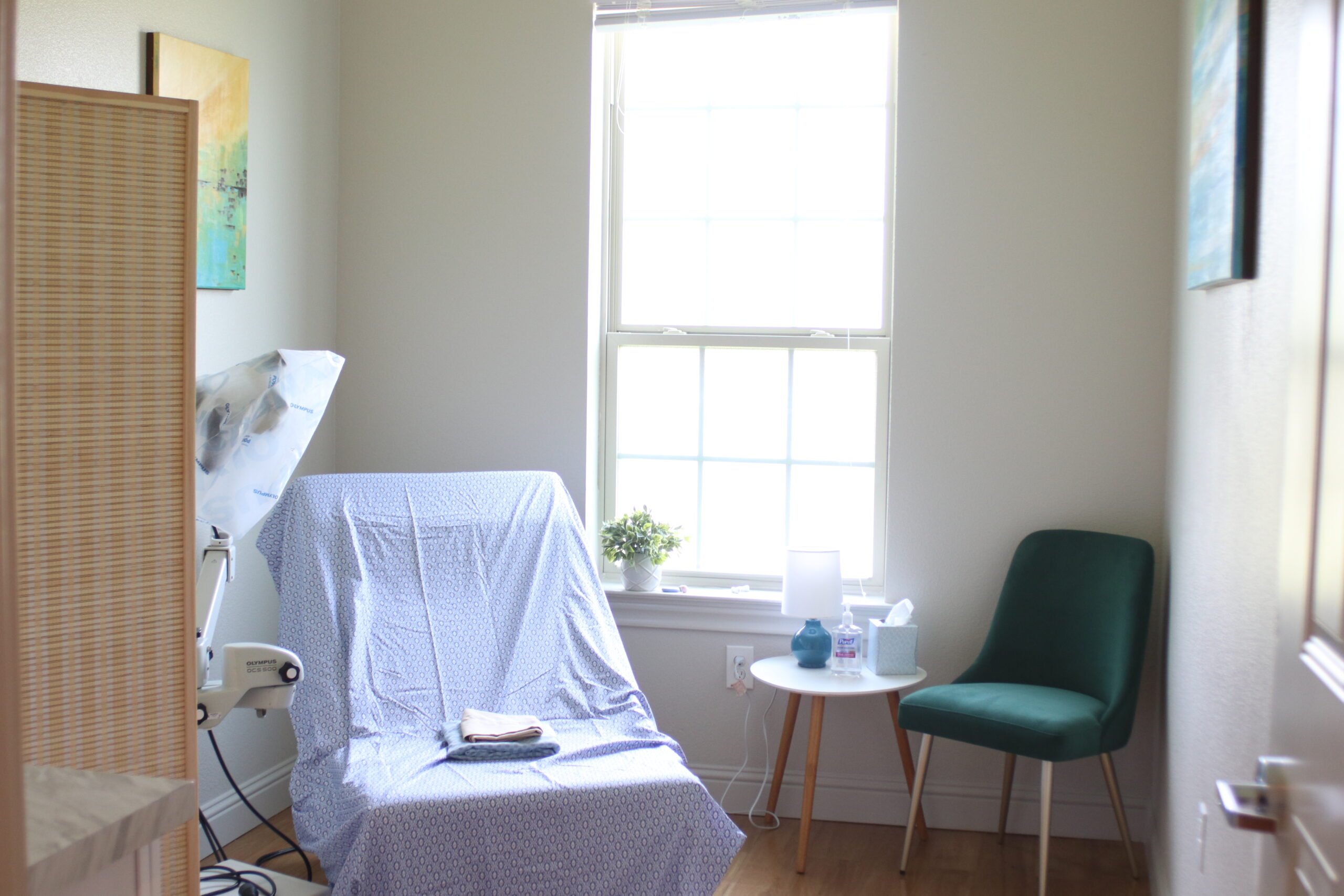
Here, time stretches. Conversations aren’t rushed. Silence isn’t filled unnecessarily. The room itself—quiet, private, intentional—becomes part of the care.
“I think it’s really important for everyone in our community to understand that you don’t have to go to an emergency room to get this kind of care. Our clinic is very quiet, it’s calm, it’s confidential and I think that was one of things I wanted to point out as one of the major differences,” Paula said.
But what truly defines the experience isn’t just the setting—it’s the intention behind every interaction.
In the words of another survivor, ”I walked in the gates of [Eloise House] and was greeted with such kindness and thoughtfulness and immediately felt safe with everyone there. They came there, in the middle of the night, JUST for me. This is what they do, and the call time never ends. Yet they do not complain. Instead, they sat me down on a couch in a room of beautiful paintings, butterflies and flowers and fed me snacks and gave me a blanket and a jacket, asked if I needed music or a show to distract me. They gave me free healthcare and a sexual assault kit, and free STD and pregnancy prevention, even naseau medication. These women took every step to make sure I felt comfortable and safe and cared for.”
Trauma-Informed Care in Action
Trauma-informed care is often described in clinical terms, but at its core, it’s about something deeply human: understanding what it means to have control taken away—and being intentional about giving it back.
At Eloise House, this looks like:
Moving at the survivor’s pace
Asking for consent at every step
Providing clear, simple explanations before and during the exam
Checking in regularly—physically and emotionally
Creating space for the survivor to pause, ask questions, or stop at any time
As Paula shared, “A part of our trauma informed care is getting consent for every step of the exam, and not just for what they’re doing, but having the rationale. We call it 4-part consent, meaning: telling what we could do, how that’s done, why it might be important or the limits of that and then is that okay. Having the nurses have that rationale for every single thing we can offer our patients can be really powerful and our patients really understanding and having autonomy to really truly make decisions about their care.”
Clear communication plays a critical role. When survivors know what to expect, they are better able to make informed decisions and feel a greater sense of control in a situation where control may have been taken from them.
Centering Survivors
Shows like “The Pitt” can open the door to conversations many people don’t often have. They can bring visibility to experiences that are too often hidden.
But beyond the screen, there are spaces like Eloise House—spaces that reimagine what care can look like when it is built around dignity, autonomy, and trust.
It’s important to note that this reflection is not a critique of “The Pitt” or the way hospitals conduct forensic exams. Rather, it is an opportunity to think about how care can be done differently—how we can center survivors in every step, honor their choices, and create environments that feel physically and emotionally safe.
At Eloise House, trauma-informed care and advocacy are the foundation of every exam. From the moment a survivor walks in, every decision, every step, and every pause is guided by what the survivor needs and wants. The physical space itself—the calm, private, and intentional environment—is part of the care, just as much as the expertise of our nurses and the presence of our advocates.
We know this is the approach that offers survivors the best options available to them because time and again we hear it from their perspective, “After experiences far more horrible than I want to put into words, Eloise House felt like the first sign of hope, strength, and dignity to make it through the 5 hour exam and everything that would follow. It’s been over 5 years now, I’m still working to figure out what carrying hope looks like each day, but I know that Eloise House modeled it when I couldn’t comprehend anything other than shock and horror. My hope lies in a future where survivors continue to know that safety and dignity will always be something fighting for.”
By putting the survivor at the center, by offering choice without pressure, and by embedding advocacy and trauma-informed practices into every moment, we can reimagine what the forensic exam experience can be.
Support Eloise House
Due to funding challenges, forensic exams at Eloise House are at risk.
The kind of care described here—care that is trauma-informed, survivor-led, and grounded in advocacy—does not happen by accident. It requires dedicated spaces, trained professionals, and the time to move at a survivor’s pace. Without sustained support, services like those at Eloise House become harder to maintain, putting this level of care at risk for those who need it most.
If you’d like to support Eloise House and SAFE, one of the most powerful ways is to help ensure our community leaders understand what’s at stake. You can do this by sharing SAFE’s work with your networks or speaking out and sharing your story or perspective. Or if you’re able, donations help us continue providing these critical, life-changing services.
If you’ve experienced an unwanted sexual encounter, dating or domestic violence, or sex trafficking, contact SAFE for free resources and specialized care through the confidential, 24-hour SAFEline. Call: 512–267–SAFE (7233), Text: 737–888–7233, or Chat: safeaustin.org/chat.